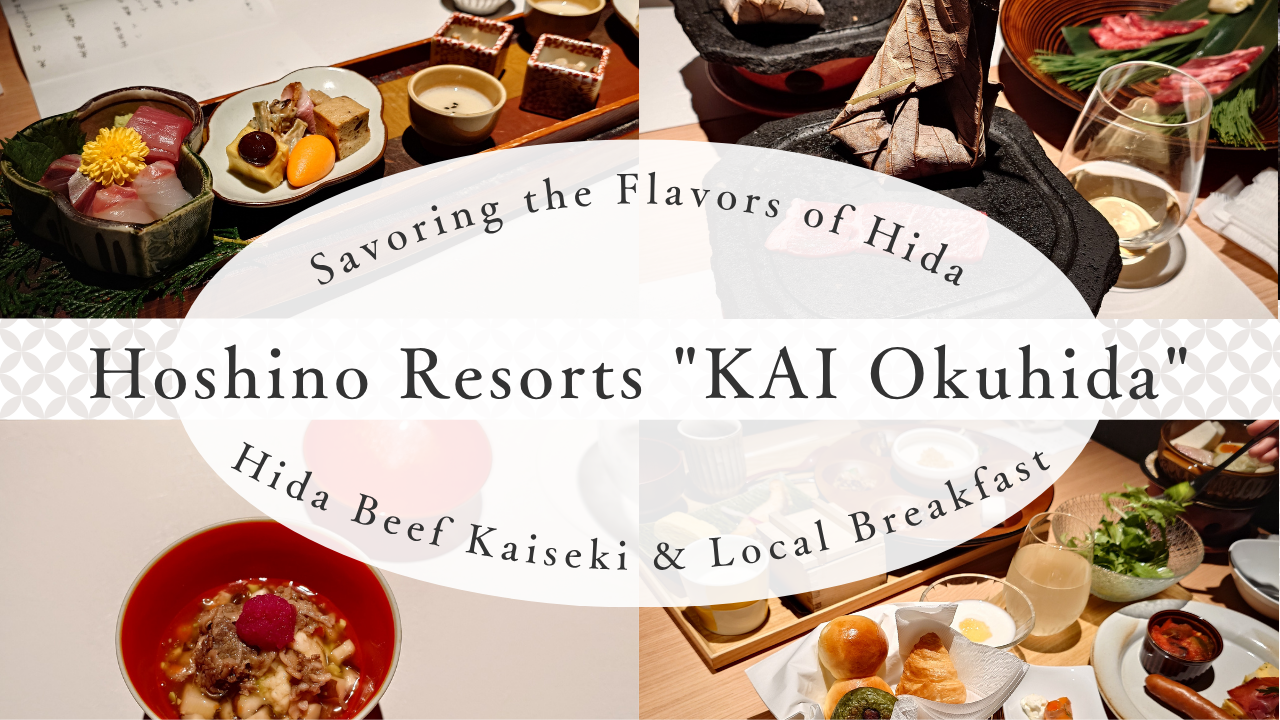
A relaxing “girls’ trip” with my mother and sister—the trip to Takayama was meant to be a luxurious way to spend time doing nothing.
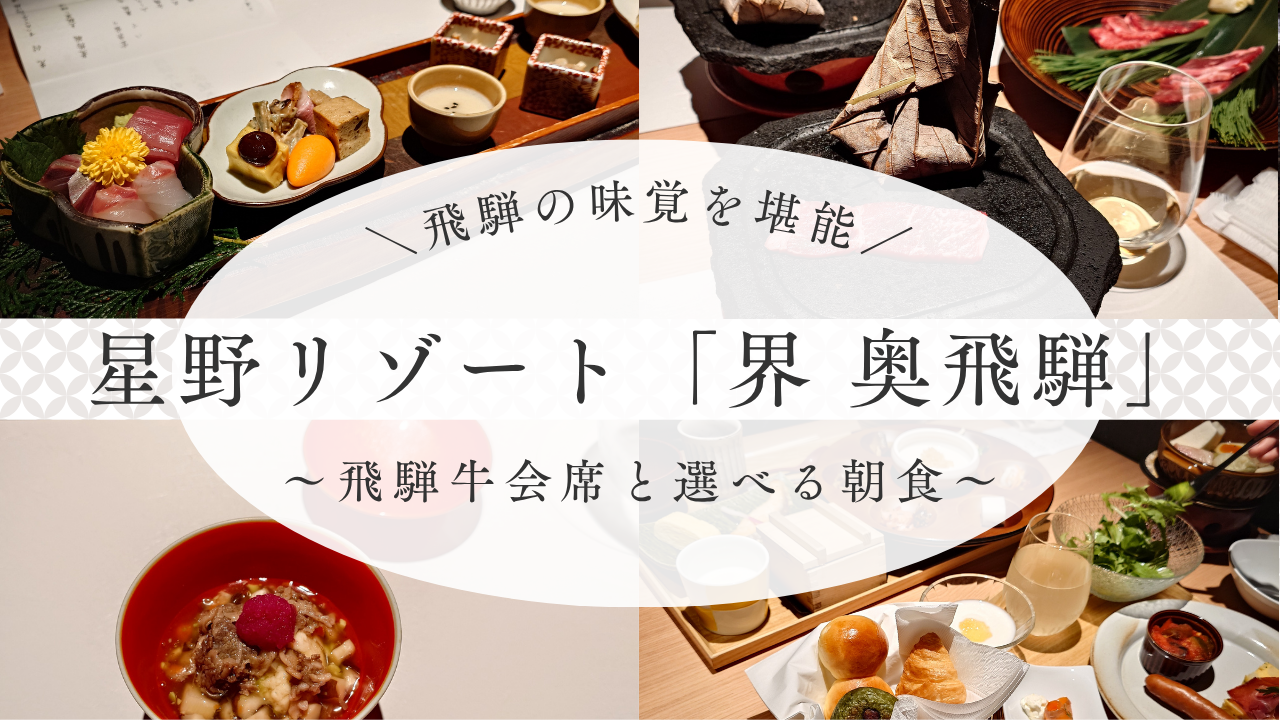
And naturally, one of our biggest highlights at Hoshino Resorts KAI Okuhida was the dining experience. As women who handle the everyday cooking for our respective households, having a meal prepared for us was the ultimate seasoning: “No cooking, no dishes, just sit back and enjoy!”
Dinner: “Hida Beef Genbu-yaki” Kaiseki Course
Colorful Sakizuke (Appetizer) & Rich Dobin-mushi (Earthenware Teapot Soup)
Crispy Tempura & The Main Course: Hida Beef “Genbu-yaki”
Black Sesame Ice Cream & Toasted Marshmallow Dessert
Breakfast: Choice of Japanese or Western Style
Western Breakfast: Warm Pot-au-Feu Oden
Summary: A Sophisticated Taste of Local Tradition
Dinner: Savoring Local Flavors with the “Hida Beef Genbu-yaki” Kaiseki Course
Both dinner and breakfast are served in the dining room on the 1st floor of the East Wing, right next to the Main Building.
Arriving slightly before our reserved dinner time, we waited on a bench near the entrance. Guests are guided to their tables right on the dot, and after a brief five-minute wait, we were shown to our seats.
The dining area was divided into semi-private booth seating, giving it the atmosphere of a modern izakaya (Japanese pub). Thanks to the semi-private booths, we were able to relax and enjoy the course meal without worrying about making eye contact with other customers.
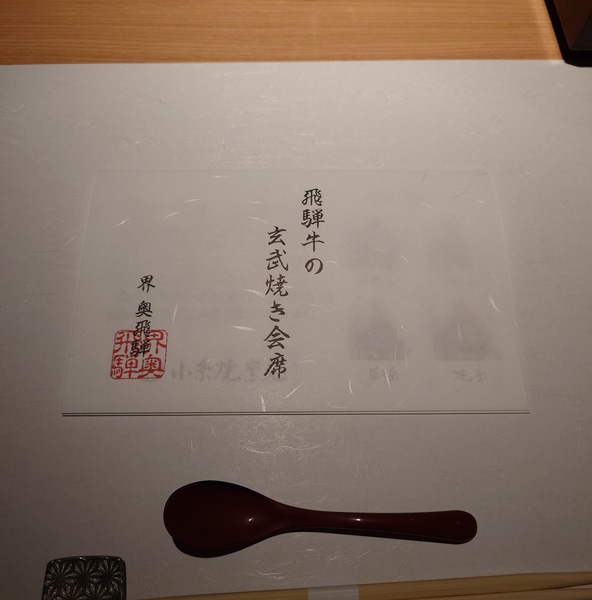
At the center of the wooden table, crafted using traditional woodworking techniques from the Hida region, sat a protective charm called a Yamabikiko doll and a small vermilion vessel.
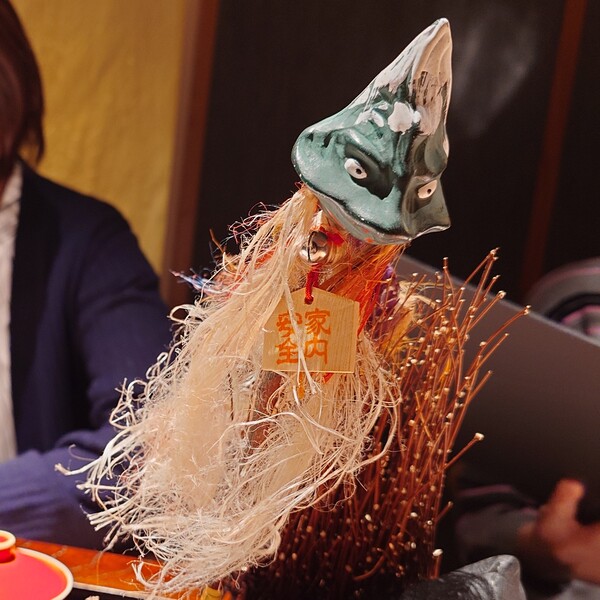
What is a Yamabiko Doll?
The Yamabikiko doll, originating in Hida Takayama, is a traditional amulet created by Yamabikiko Yorise, a local cultural figure, to worship the spirits of the mountains. It is believed to bring good fortune and ward off evil spirits. The head represents the peaks of the Northern Alps, the expression symbolizes reverence for nature, and the colors represent the four seasons. It is a truly fantastical and captivating doll.
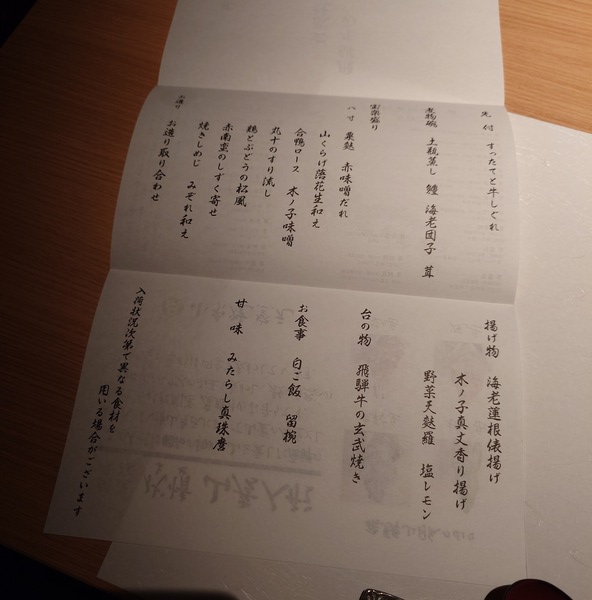
Colorful Sakizuke (Appetizer) & Rich Dobin-mushi (Earthenware Teapot Soup)
The meal began with a Sakizuke (appetizer) served in a vermilion-colored bowl.
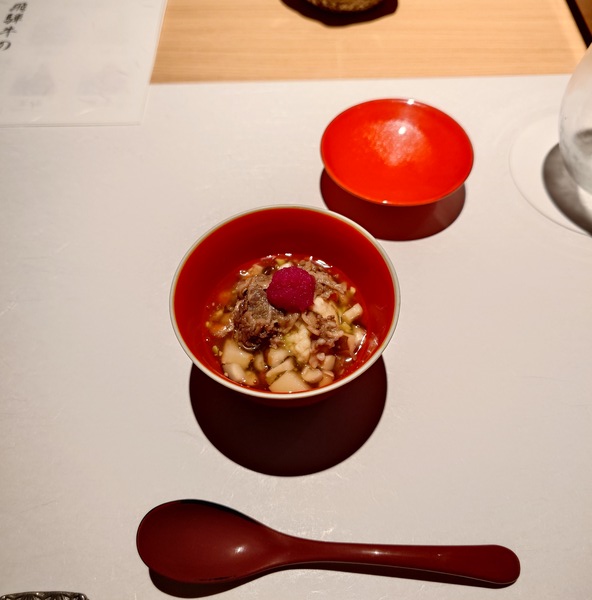
“Suttate” is a traditional local dish from Shirakawa-go, a famous historic village near Takayama.
“Suttate” is made by soaking soybeans in water, boiling them, and then mashing them into a creamy paste. Traditionally, it is served in a warm soup seasoned with miso and soy sauce.
In Kai-Okubita, this “Suttate” is served on top of a ”chawanmushi” (smooth and flavorful steamed egg), accompanied by sweet and savory Hida beef simmered in soy sauce and bright red grated daikon radish, making it a visually appealing appetizer.
The rich chawanmushi (steamed egg custard) combined with “suttate” (a type of savory condiment) and sweet and savory beef created a deep flavor that was almost like tasting a Japanese-style cream. It was truly delicious!
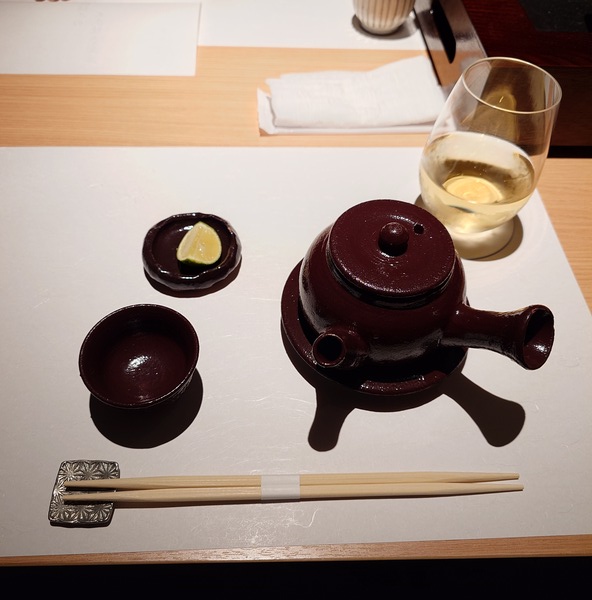
Next up was a ”Dobin-mushi” stew.
Dobinmushi is a Japanese dish made by heating or steaming high-quality broth and ingredients in a small ”Dobin” (similar to a teapot). It is mainly served as a seasonal soup (osuimono) in autumn in kaiseki cuisine.
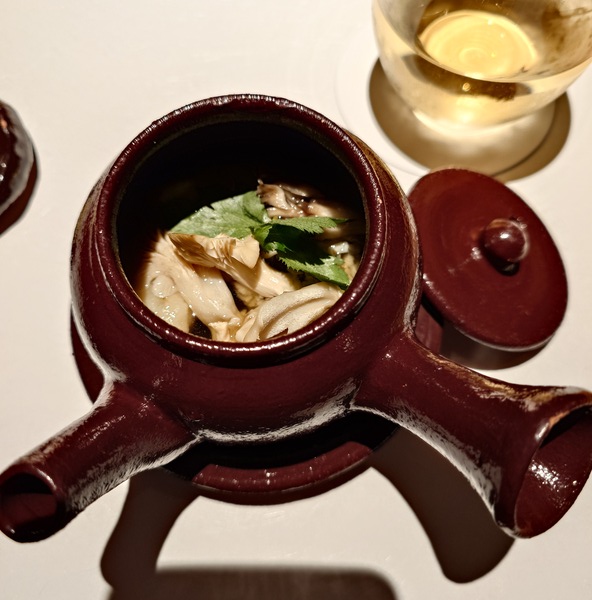
Inside the “Dobin” were dabs of pike conger (hamo), tender shrimp meatballs, and aromatic ”maitake mushrooms”. Pouring the piping hot broth into the cup released a deep, delicate aroma. The rich dashi broth warmed us right to the core.
Maitake mushrooms are commonly eaten in Japan. They have a good taste and aroma, and retain their texture even when cooked. They go well with any type of cuisine, whether Japanese, Western, or Chinese,[9] and are often used in stir-fries, hot pots, tempura, and stews.
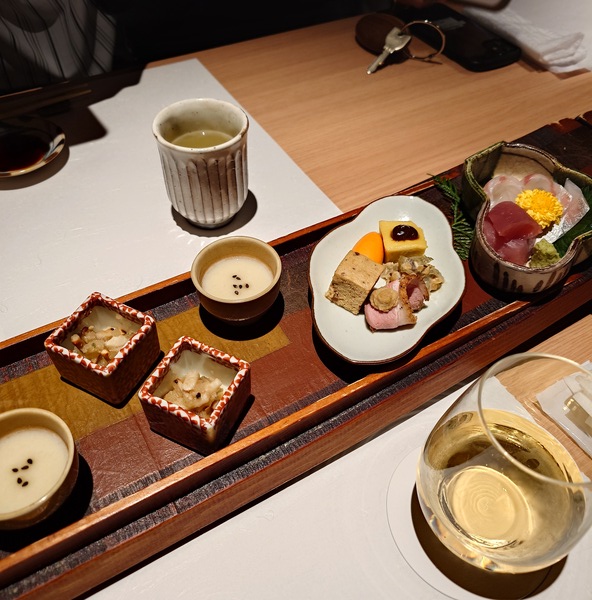
After warming ourselves with ”Dobin-mushi”, we were served a dish called “Horaku-mori,” which consisted of “Hassun” of food and fresh sashimi.
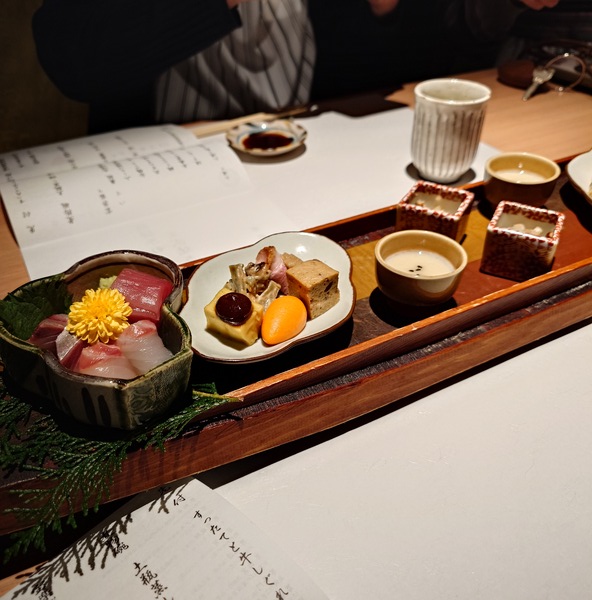
The sashimi—featuring tuna and red sea bream—was astonishingly fresh for a location tucked deep in the mountains of Takayama!
The platter also included
The “Houraku-mori” offered bite-sized portions that allowed me to enjoy a variety of textures and seasonal flavors.
Crispy Tempura & The Main Course: Hida Beef “Genbu-yaki”
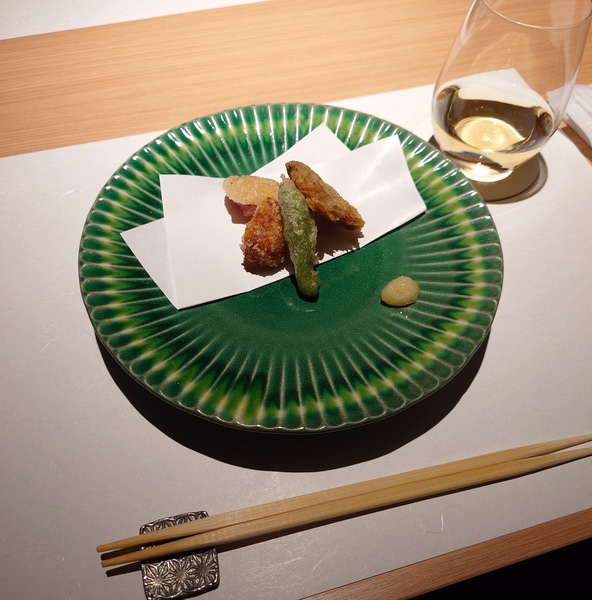
Next, freshly fried tempura was brought out. It included shrimp and lotus root ”Tawaraage”, ”mushroom Shinjyo”, sweet potato, and shishito peppers. Instead of the usual tempura dipping sauce, lemon salt was served.
The batter was surprisingly thin and crispy, giving it an elegant and light feel. The ”Tawaraage” offered a pleasant crunch from the lotus root, and each bite of the ”mushroom Shinjyo” filled my mouth with the rich flavor of burdock root.
Since fried foods were off-limits for my mother due to health reasons, my sister and I happily shared her portion!
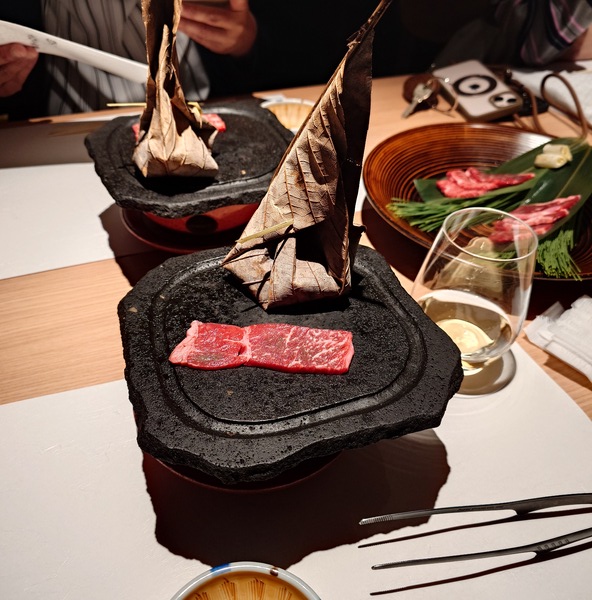
While enjoying a delicious meal, the main course arrived. It was Hida beef, served on a plate made of natural lava stone, which we cooked ourselves.
What is Hida Beef?
Hida beef is a world-renowned premium Wagyu beef raised in Gifu Prefecture, characterized by its fine texture, tender mouthfeel, beautiful marbling, and melt-in-your-mouth quality.
Hida beef refers to Wagyu beef that meets the following criteria set by the Hida Beef Brand Promotion Council
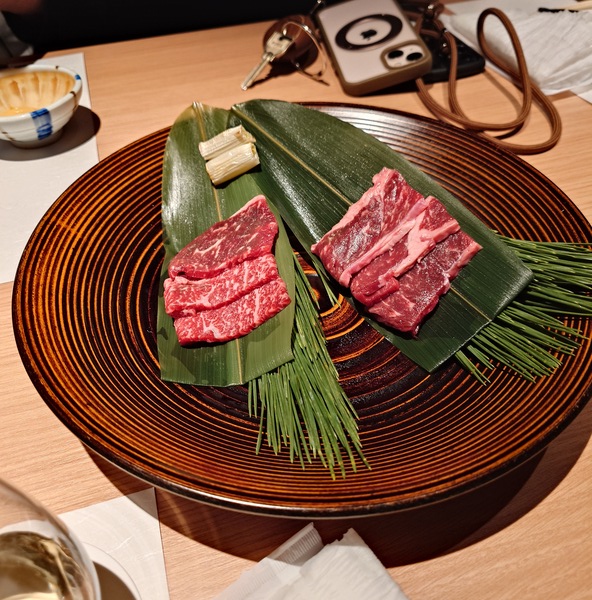
Even though it was Hida beef, it was a lean cut with relatively little fat. It was thinner than typical barbecue slices and had a firm texture, which older travelers might find a bit chewy
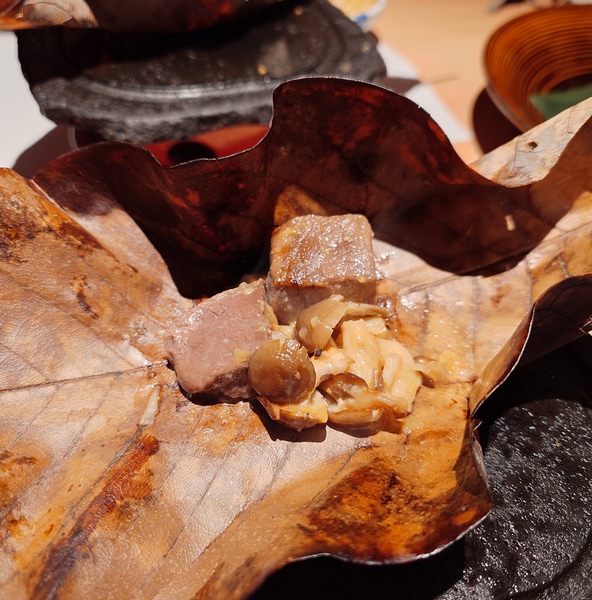
However, the meat wrapped in fragrant magnolia leaves was tender, diced beef! The combination of the fragrant roasted magnolia leaves, rich miso, and tender beef was a flavor unique to Takayama, and it made me want to eat white rice.
Black Sesame Ice Cream & Toasted Marshmallow Dessert
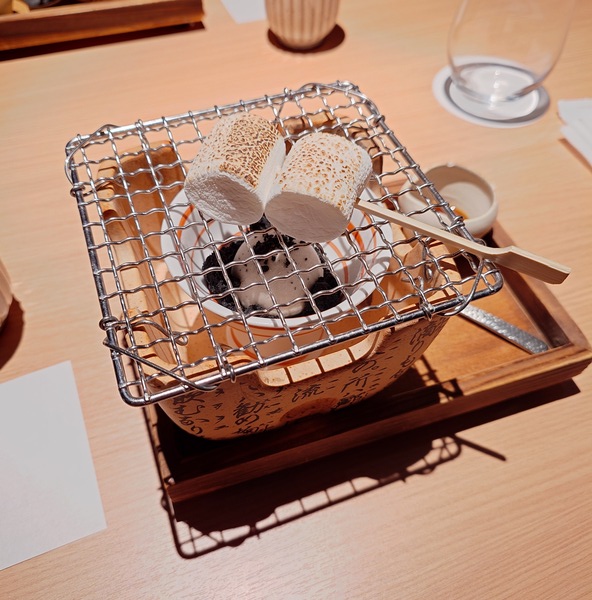
To conclude the meal, a dessert of mitarashi marshmallows served in a charcoal-grilled-style dish was brought out.
Inspired by Takayama’s famous street food (Mitarashi Dango—grilled rice cakes coated in sweet-and-savory soy glaze), skewers of marshmallows were lightly toasted over a flame and drizzled with sticky mitarashi sauce. It was quite sweet and felt very fun, likely designed with international travelers in mind!
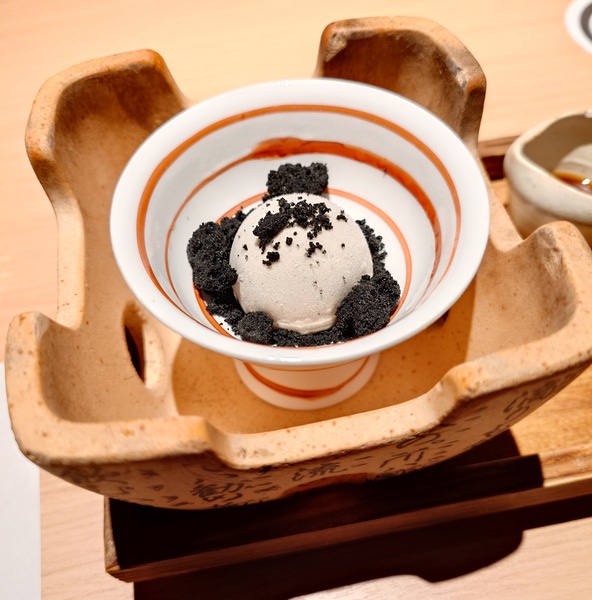
Beneath the grill grate, which resembled a stove, were black sesame cookies shaped like charcoal fragments and smooth black sesame ice cream. The ice cream had a light, gelato-like texture, and the rich sesame flavor and aroma filled the mouth, making it the perfect way to finish the meal.
Dinner Overview:While traditional Japanese inn meals can sometimes be overwhelming due to the sheer quantity, the dinner at KAI Okuhida was a refined course meal with elegant portions. The dishes, a masterful fusion of local ingredients and culinary culture, were delicious, and we thoroughly enjoyed our time there.
Breakfast: Fresh Local Vegetables & Choice of Japanese or Western style
Breakfast was served in the same dining venue in the East Wing (reservations required).
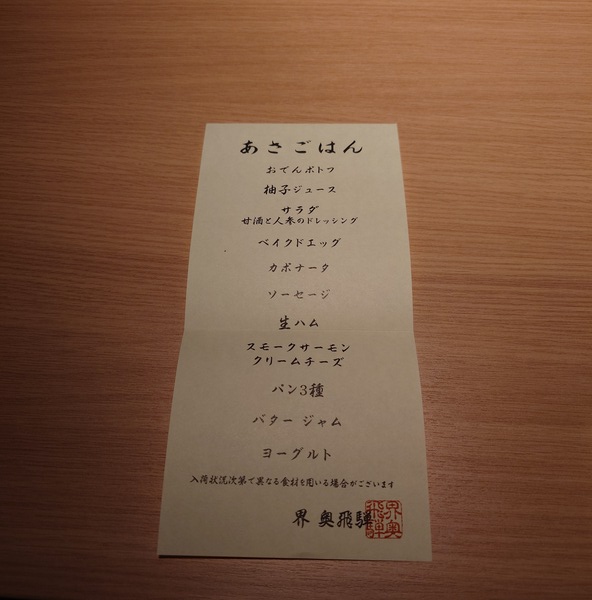
Upon checking in the previous day, guests can choose between a Japanese Set or a Western style.
My mother opted for the Japanese breakfast, while my sister and I chose the Western set.
Western Breakfast: Warm Pot-au-Feu Oden
The star of the Western-style breakfast was a piping hot pot-au-feu reminiscent of oden (Japanese stew).
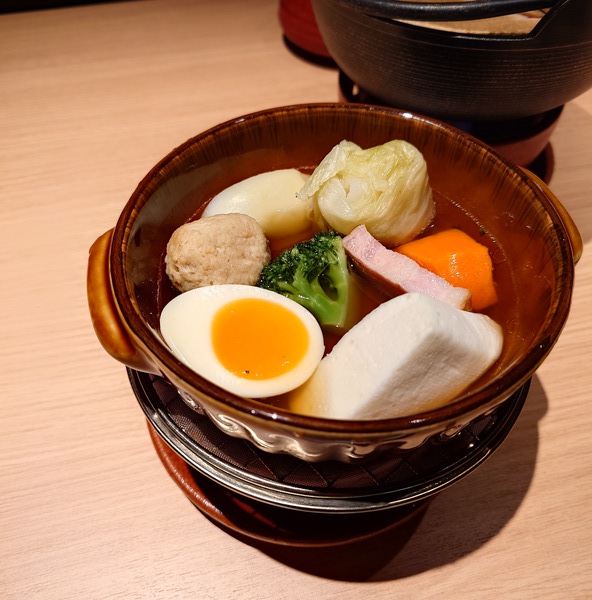
This oden, packed with ingredients like cabbage rolls, potatoes, carrots, bacon, hanpen(fish cake), chicken meatballs, and a soft-boiled egg, was a masterpiece that blended the elements of Japanese oden with a mild French-style broth. The delicate soup completely chased away my morning drowsiness.
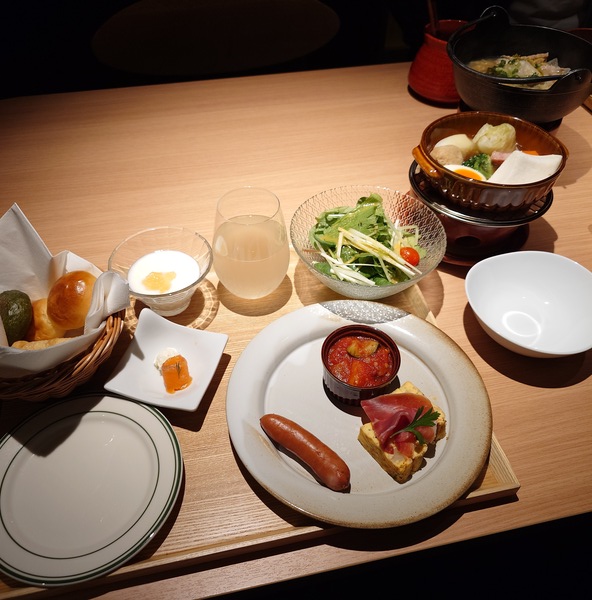
What impressed me the most was the freshness of the vegetables! The local vegetables used in the salad and ratatouille had a great texture, a natural sweetness, and were surprisingly flavorful.
The meal included three warm, freshly baked pastries: a croissant, brioche, and a mugwort-and-red-bean (yomogi azuki) roll.
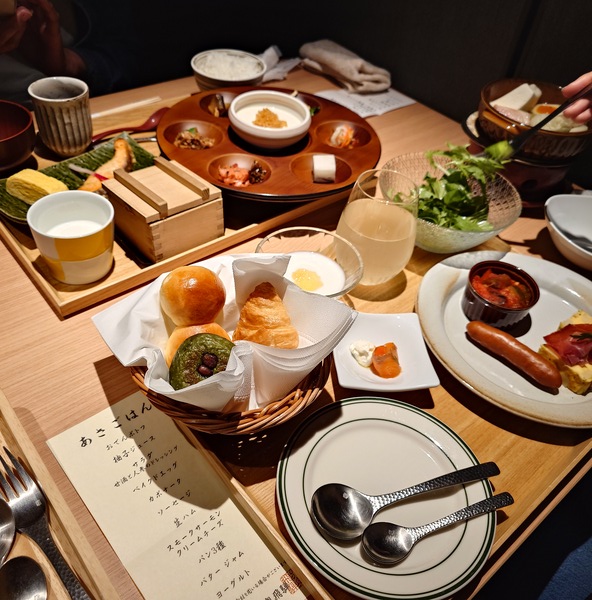
My mother’s chosen Japanese breakfast centered around a warm miso hot pot made with dried fish from the Hida region, accompanied by classic Japanese breakfast items such as tamagoyaki (rolled omelet) and grilled salmon. Just like dinner, there was a wide variety of flavorful side dishes that paired well with rice.
Breakfast Overview:Free refills were available for rice, bread, and juices. While the portion was perfectly satisfying for us, travelers with larger appetites might want to ask for extra bread or rice!
☕ About after-meal coffee
Coffee and tea are not served in the main dining room after meals.
If you’d like a warm cup of coffee after breakfast, stop by the Annex Lounge on your way back to your room! Take some coffee or tea with you and enjoy it at your leisure in your room.
Summary: A Sophisticated Taste of Local Tradition
At KAI Okuhida, you can enjoy traditional regional cuisine and fresh, locally sourced ingredients. The light and refined portion sizes are carefully chosen to allow you to fully appreciate the flavor of each dish.
This dish, which is substantial yet not too heavy, is perfect for female travelers and multi-generational family trips including parents. In a relaxed atmosphere reminiscent of a semi-private room, you can savor each bite and enjoy an unforgettable culinary journey.
For the first time in a while, we were able to forget the usual hustle and bustle and enjoy a luxurious time with our family, savoring delicious food little by little.
Up Next ⇒ Must-Visit Takayama Bakery: Our Stop at the Renowned “TRAIN BLEU“!

P.S. This English version was written with the help of translation tools. I hope it reads well, but please bear with me if there are any awkward phrases!
コメント