
Introduction : Say Goodbye to Daily “Decision Fatigue”!
【Rule 1】Do not repeat the same main ingredient consecutively.
Example Weekly Rotation
【Rule 2】Shop without deciding on a menu.
【Rule 3】 Weekend “Menu Planning Meeting” and an Analog Menu Notebook
【Rule 4】”Preparation” using Japanese fermented seasonings
Flavor Ideas
【Rule 5】 Make days when you work overtime “Gluten-Free Curry Day.”
Conclusion : Let’s turn daily dinner preparation into a fun, stress-free routine!
Introduction: Say Goodbye to Daily “Decision Fatigue”!
After learning that my husband has food allergies to wheat, dairy products, eggs, and other ingredients, we started a “not-so-strict gluten-free and allergen-free” diet. However, the biggest challenge wasn’t finding ingredients, but deciding what to cook for dinner every day.
Eating the same foods repeatedly increases the risk of developing delayed-onset food allergies, so a varied diet was essential for us. However, after a long day at work, having to plan dinner from scratch with an already tired brain was a real “mental burden.”
At that time, we found inspiration in an unexpected place: Japan’s school lunch system. Drawing inspiration from this systematic yet diverse school lunch system, I created my own weekly meal plan rules based on five rules.
This is what our eating habits are like as a busy working couple in Japan.
- Breakfast: Self-service (quick options like bananas and protein shakes)
- Lunch: My husband takes a homemade Bento; I head to the office with an Onigiri (rice ball) and protein.
- Dinner: We cook at home and eat together.
Here are my five rules for making daily cooking stress-free, healthy, and fun!
【Rule 1】Do not repeat the same main ingredient consecutively.
Rather than following a fixed schedule—such as “chicken every Monday” or “fish on the 5th of the month”—I use a simple rotation rule: I do not serve the same main protein two days in a row.
To accommodate my husband’s allergies, I primarily use rice as the source of carbohydrates when preparing gluten-free meals. For protein, I mainly use chicken, pork, seafood, and soy products (such as tofu and thick fried tofu).
(My husband is allergic to wheat, beef, eggs, and milk.)
Example Weekly Rotation
- Mon: Chicken
- Tue: Fish
- Wed: Tofu / Soy
- Thu: Pork
- Fri: Fish
This rotation schedule is flexible rather than fixed to specific dates, allowing you to adjust it based on the items you buy or the ingredients you have on hand.
By keeping a stock of protein sources on hand, you can make quick decisions—such as “Let’s have fish tonight; maybe I’ll grill some mackerel”—whenever you see fish in the fridge.
【Rule 2】Shop without deciding on a menu.
Heading to the supermarket with a rigid meal plan can be stressful—especially if planned items are overpriced or out of stock.
Instead, we go grocery shopping without a set menu in mind. We freely choose seasonal vegetables, discounted meat and fish, and anything else that looks fresh and appetizing. This allows us to enjoy seasonal ingredients while staying within our budget and keeping the shopping experience fun.
【Rule 3】 Weekend “Menu Planning Meeting” and an Analog Menu Notebook
After returning from the weekend grocery run and checking the freezer inventory, I hold a “menu meeting” to decide the week’s meal plan.
- Pick the main dishes: Rotate proteins following Rule 1 (no duplicates in a row).
- Choose side dishes & soups: Build sides around the fresh vegetables we purchased.
- Write it down:Once the menu is set (it’s handy to jot down ideas on your smartphone), write everything down in your meal planning notebook.
I write down my finalized weekly meal plan in a notebook and hang it on the refrigerator door. This is my ultimate tool.
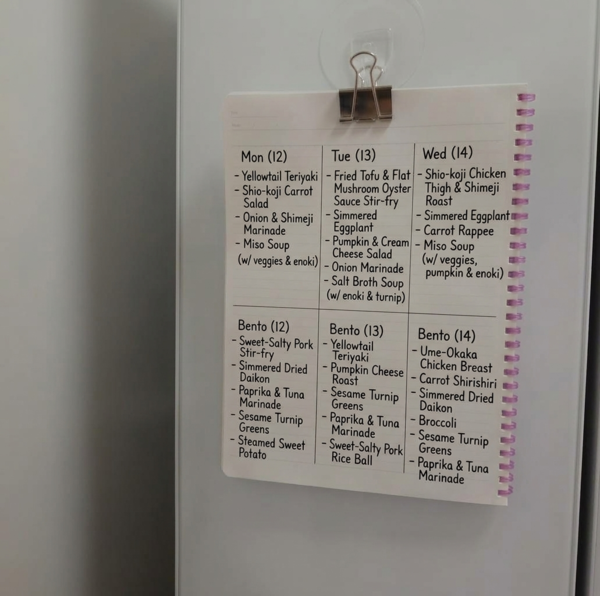
In other words, you no longer need to handle your smartphone with wet hands while cooking. Even when you come home after a long day at work—suffering from terrible “brain fog”—a quick glance at your notes lets you start cooking immediately, without having to think things through.
【Rule 4】”Preparation” using Japanese fermented seasonings
On days when we go grocery shopping, we immediately season the meat and seafood and freeze them. We call this process “Ingredient Prep.”
Our “secret ingredients” are shio-koji (salted rice malt) and shoyu-koji (soy sauce-marinated rice malt)—traditional Japanese fermented seasonings. While making these homemade koji seasonings takes a bit of effort, adding just 10% of the meat’s weight in koji breaks down the proteins, resulting in amazingly tender meat and bringing out the ingredients’ natural umami!
Flavor Ideas
- Chicken: Shio-Koji marinades, Shoyu-Koji marinades, or classic Teriyaki
- Pork: Japanese Ginger Pork (Shogayaki), Pork Chops, or Mild BBQ glaze
- Fish: Miso-marinated (or miso-simmered), mirin-marinated, teriyaki, or salt-koji marinated
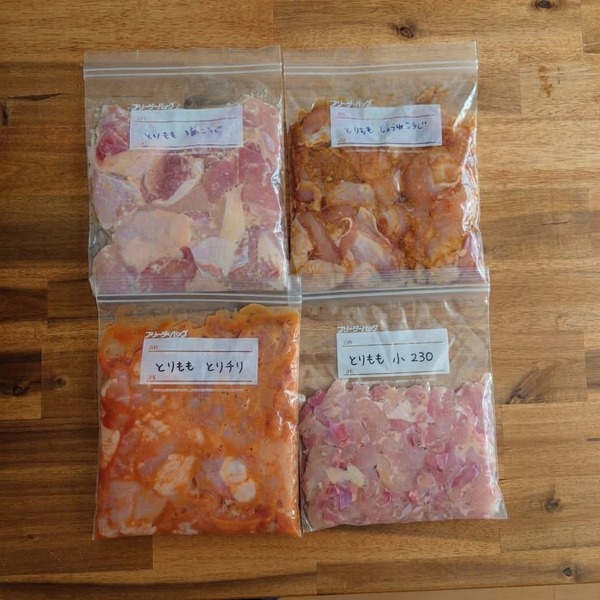
Having these savory, pre-marinated proteins in the freezer drastically reduces our weekday dinner prep time.
【Rule 5】 Make days when you work overtime “Gluten-Free Curry Day.”
On days when work piles up—such as before deadlines or at the end of the month—I inevitably end up working late and getting home late. In the past, I used to feel incredibly stressed about having to prepare elaborate meals when I was already completely exhausted.
So, I established a rule: “On days when I’m working late, I eat gluten-free curry.“
On weekends when I have some spare time, I make a large batch of “gluten-free curry”—using a wheat-free roux—and freeze it for later.
Having this ready means that even on days when I get home late, I can simply heat it up and have a meal right away.
Japanese curry is the ultimate comfort food that satisfies both body and soul.
My husband loves it, and best of all, it completely eliminates the stress of preparing dinner on busy days.
Conclusion : Let’s turn daily dinner preparation into a fun, stress-free routine!
I used to agonize over what to cook for dinner on my way home, but ever since I adopted a system of planning my meals a week in advance, preparing dinner has become much easier. It has even started to feel fun—almost like completing a “daily quest.”
If you constantly feel stressed about planning your daily meals or struggle to find a variety of options for a gluten-free diet, I highly recommend incorporating my “weekly meal plan rules” system into your life!
P.S. This English version was written with the help of translation tools. I hope it reads well, but please bear with me if there are any awkward phrases!
コメント